Transmitter & Receiver
Why Your FPV Connection is Failing: A Senior Engineer’s Perspective
As a senior engineer, I’ve seen it all—from the dreaded ‘signal out of nowhere’ bug to transmitters that feel imprecise because the architecture ‘invents’ signal rather than processing it cleanly. When you are assembling your latest FPV Frame Kit, the link between your hands and the sky is the most critical component. If your board isn’t working or you suspect a bad IC module after a long winter of storage, you aren’t alone. Many pilots struggle with rapid strobing link lights or transistors that fail to maintain oscillations once the switch is opened.
Comparison: Leading FPV Protocols
Protocol
Frequency
Range
Best For
ExpressLRS (ELRS)
2.4GHz / 900MHz
Extreme Long Range
Racing & Freestyle
TBS Crossfire
915MHz / 868MHz
High Penetration
Professional Cinematic
FrSky ACCST
2.4GHz
Short/Medium Range
Budget Builds
To keep your gear in top shape and avoid the ‘imprecise’ feel of cheap gimbals, always use the right Drone Tools for maintenance and calibration. Remember, while your transmitter needs a reliable internal cell, your quad’s performance depends on a high-discharge 100C Lipo Battery to ensure the receiver doesn’t brown out during aggressive maneuvers.
Common Troubleshooting & FAQs
What is a transmitter and receiver?A transmitter is an electronic device that sends radio waves (your stick inputs), while the receiver (Rx) captures those signals on the drone and converts them into data for the flight controller.
Can I use any transmitter with any receiver?No. Matching the frequency and the protocol (like ELRS or Crossfire) is non-negotiable. If the modulation methods don’t align, the devices will never ‘talk’ to each other.
What is the purpose of a transmitter?In the FPV world, the transmitter reads the physical input from your gimbals and switches, converting that data into a scaled linear output signal transmitted over the air.
What is the main function of a receiver?The receiver acts as the ‘ear’ of your drone. It processes incoming audio/data signals from the transmitter and distributes them to the flight controller to dictate motor movement.
Is a mic a transmitter or receiver?In wireless systems, the microphone is the transmitter (it sends the sound), while the ‘box’ connected to the recording gear is the receiver. In FPV, we use similar logic for our VTX (Video Transmitter) and VRX (Video Receiver) systems.
- Drone Accessories
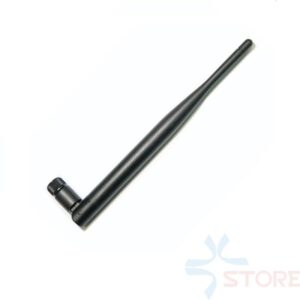
820Mhz-960Mhz RPSMA Omnidirectional Antenna 5DBI For XBee PRO 900HP and XTEND Micorhard P900
$20.24 - Drone Transmitter & Receiver
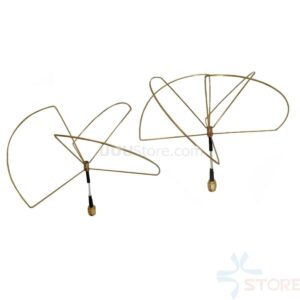
1.2G 3 4 Blades RP-SMA Clover Leaf Antenna Skew Planar for 1.2Ghz Audio Video FPV TX RX
$29.34 - Drone Accessories
5725-5850Mhz 5.8GHz 12dBi Omni-directional Fiberglass Antenna N-K Connector
Original price was: $199.00.$69.91Current price is: $69.91. - Drone Accessories
1.2G Antenna 16DB Long 45cm Strong magnetic big sucker fiber glass Antenna with 3M SMA Male cable
$73.86 - Drone Accessories
JPC-12 portable short wave antenna pac-12 shortwave antenna field balcony gantry antenna
$161.83 - Drone Accessories
5.8Ghz 2.8dBi SMA male RP-SMA Male Inner Needle Antenna FPV Racer Multicopter For RC Camera Drone
$237.28 - Drone Accessories
CUAV C-RTK 9P MMCX Change To TNC 4G LTE Link System Antenna Extension Cable
$925.26 - Drone Transmitter & Receiver
KC901V 6.8GHz Handheld Network Analyzer RF multimeter vector network analyzer day feeder analysis
$2,349.35








Why Your FPV Connection is Failing: A Senior Engineer’s Perspective
As a senior engineer, I’ve seen it all—from the dreaded ‘signal out of nowhere’ bug to transmitters that feel imprecise because the architecture ‘invents’ signal rather than processing it cleanly. When you are assembling your latest FPV Frame Kit, the link between your hands and the sky is the most critical component. If your board isn’t working or you suspect a bad IC module after a long winter of storage, you aren’t alone. Many pilots struggle with rapid strobing link lights or transistors that fail to maintain oscillations once the switch is opened.
Comparison: Leading FPV Protocols
Protocol
Frequency
Range
Best For
ExpressLRS (ELRS)
2.4GHz / 900MHz
Extreme Long Range
Racing & Freestyle
TBS Crossfire
915MHz / 868MHz
High Penetration
Professional Cinematic
FrSky ACCST
2.4GHz
Short/Medium Range
Budget Builds
To keep your gear in top shape and avoid the ‘imprecise’ feel of cheap gimbals, always use the right Drone Tools for maintenance and calibration. Remember, while your transmitter needs a reliable internal cell, your quad’s performance depends on a high-discharge 100C Lipo Battery to ensure the receiver doesn’t brown out during aggressive maneuvers.
Common Troubleshooting & FAQs
What is a transmitter and receiver?A transmitter is an electronic device that sends radio waves (your stick inputs), while the receiver (Rx) captures those signals on the drone and converts them into data for the flight controller.
Can I use any transmitter with any receiver?No. Matching the frequency and the protocol (like ELRS or Crossfire) is non-negotiable. If the modulation methods don’t align, the devices will never ‘talk’ to each other.
What is the purpose of a transmitter?In the FPV world, the transmitter reads the physical input from your gimbals and switches, converting that data into a scaled linear output signal transmitted over the air.
What is the main function of a receiver?The receiver acts as the ‘ear’ of your drone. It processes incoming audio/data signals from the transmitter and distributes them to the flight controller to dictate motor movement.
Is a mic a transmitter or receiver?In wireless systems, the microphone is the transmitter (it sends the sound), while the ‘box’ connected to the recording gear is the receiver. In FPV, we use similar logic for our VTX (Video Transmitter) and VRX (Video Receiver) systems.
