
Agriculture drone
The 60kg Payload Revolution: Why the DJI Agras T60 is the New Gold Standard for Smart Farming
As a senior engineer who has seen the evolution from 10L prototypes to the current 124kg MTOW beasts, the DJI Agras T60 represents a massive leap in operational efficiency. By fusing Active Phased Array Radar with a Trinocular Fisheye Vision system, this drone doesn’t just fly; it perceives. Whether you are managing complex orchards or 1,000-acre broadacre farms, the T60 delivers a 150-200% productivity gain over previous generations, covering up to 50 hectares per hour with surgical precision.
Real-World Use Cases: From Mountain Orchards to Broadacre VRA
The T60 is engineered for two distinct high-stakes environments. In Orchard Mode, the dual-vision radar fusion allows the drone to navigate 30-degree slopes, avoiding power lines and branches that would ground lesser platforms. In Large-Scale Row Cropping, the Variable Rate Application (VRA) system uses multispectral mapping to adjust flow rates on the fly. This means you aren’t just dumping chemicals; you are optimizing every drop, significantly increasing ROI by reducing waste by up to 50%.
Feature
DJI Agras T60 Specification
Max Takeoff Weight (MTOW)
124 kg (Spreading) / 103 kg (Spraying)
Atomization Tech
Dual Centrifugal Atomizing Nozzles
Obstacle Sensing
360° Active Phased Array Radar + Trinocular Vision
Effective Swath Width
Up to 16 Meters
Positioning
RTK-GNSS (Centimeter-level)
Pros and Cons: An Engineer’s Perspective
The Pros: The Centrifugal Atomization system is a game-changer. Unlike traditional Spray Nozzles that clog with thick suspensions, these self-cleaning atomizers allow for 50-500μm droplet adjustment. Furthermore, the Smart Battery Management system, paired with a 9,650W EFI generator, allows for a 9-minute rapid charge, keeping the drone in the air rather than on the trailer.
The Cons: As discussed in recent industry circles (and on Reddit), drones over 55lbs require manual FAA paper registration, which can be a hurdle for beginners. Additionally, while the T60 is highly autonomous, the logistical reality is that it “needs water, needs to land, and needs an operator” for frequent reloads. You must ensure your Water Pumps and mixing stations are as fast as the drone itself to avoid bottlenecks.
Expert Tips for 24/7 Operations
Night Ops: Don’t fear the dark. The Active Phased Array Radar scans the airspace in 0.1s, making night spraying safer than daytime operations in high-heat conditions.
Battery Health: To get the full 1,500 cycles out of your Ag Drone Batteries, utilize the air-cooled heat dissipation during the EFI charging cycle.
Regulatory Awareness: With ongoing debates regarding the “DJI ban” and national security covered lists, always keep your firmware updated and maintain offline logs for compliance.
Frequently Asked Questions
How does the DJI Agras T60 handle complex terrain with its dual-vision radar fusion?
The DJI Agras T60 utilizes Security System 3.0, which fuses dual Active Phased Array Radars with a Trinocular Fisheye Vision system. This 360-degree sensor fusion allows the drone to perceive power lines, branches, and uneven slopes with centimeter-level precision, enabling safe autonomous flight at a Max Takeoff Weight (MTOW) of up to 124kg.
What makes centrifugal atomization the industry standard for 2026 agriculture drones?
Unlike traditional pressure nozzles that clog easily, centrifugal atomizing nozzles are self-cleaning and allow real-time droplet size adjustment between 50-500μm. This technology ensures deep canopy penetration and reduces chemical drift by up to 60%, making it essential for high-precision crop protection.
How does Variable Rate Application (VRA) improve ROI in large-scale drone farming?
VRA leverages multispectral prescription maps to adjust chemical flow rates in real-time based on crop health. In 2026, drones like the T60 can reduce fertilizer and pesticide waste by 30-50%, treating only the zones that require intervention rather than the entire field.
What is the charging efficiency and battery lifespan of the T60?
The 40,000mAh DB2100 smart battery supports ultra-fast 9-12 minute charging when paired with a 9,650W EFI generator. These batteries feature air-cooled heat dissipation and are rated for up to 1,500 cycles, ensuring high operational uptime during peak seasons.
Top products in Agriculture drone
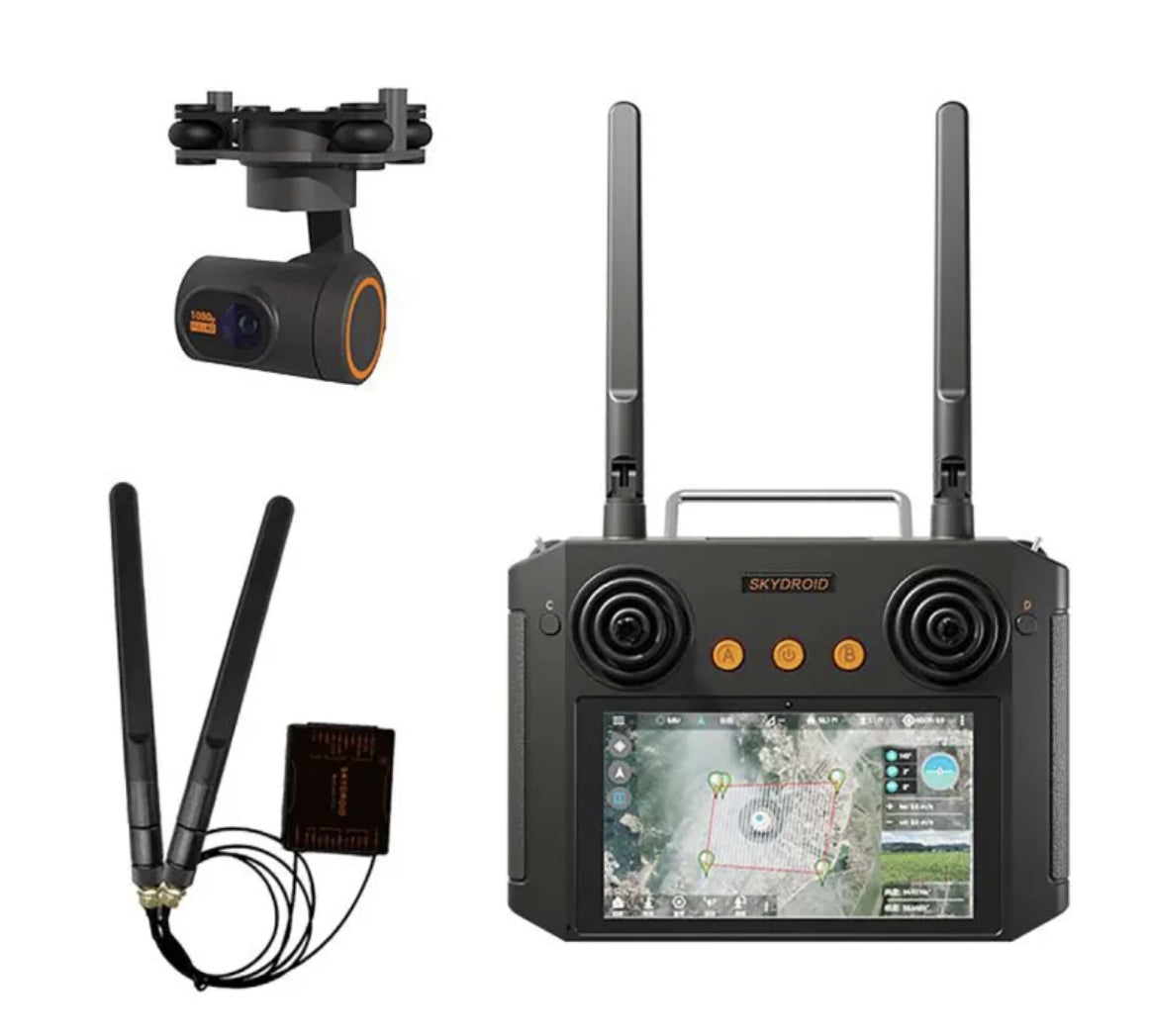
- Skydroid H12 PRO Remote Control for UAV Agricultural Sprayer Drone With 10KM 2K 1080P Video Stream 3-Axis Camera - $369.00
- SIYI VD32 remote control - 2.4G 16CH 3 in 1 integrated datalink S.BUS VTX for FPV Agricultural Spray drone - $397.99
- Skydroid H12 2.4GHz 12 Channel 1080P remote control spray drone digital image control R12 Receive Plant Protection Machine - $50.72
- Skydroid H12 remote control 1080P agricultural spray drone digital image control three in one Android one remote control Drone - $50.72
- EFT drone frame folding carbon tube - E410P E416P E610P E616P 30mm 35mm 40mm Arm agricultural spray aluminum tube Agriculture Drone Accessories - $28.05
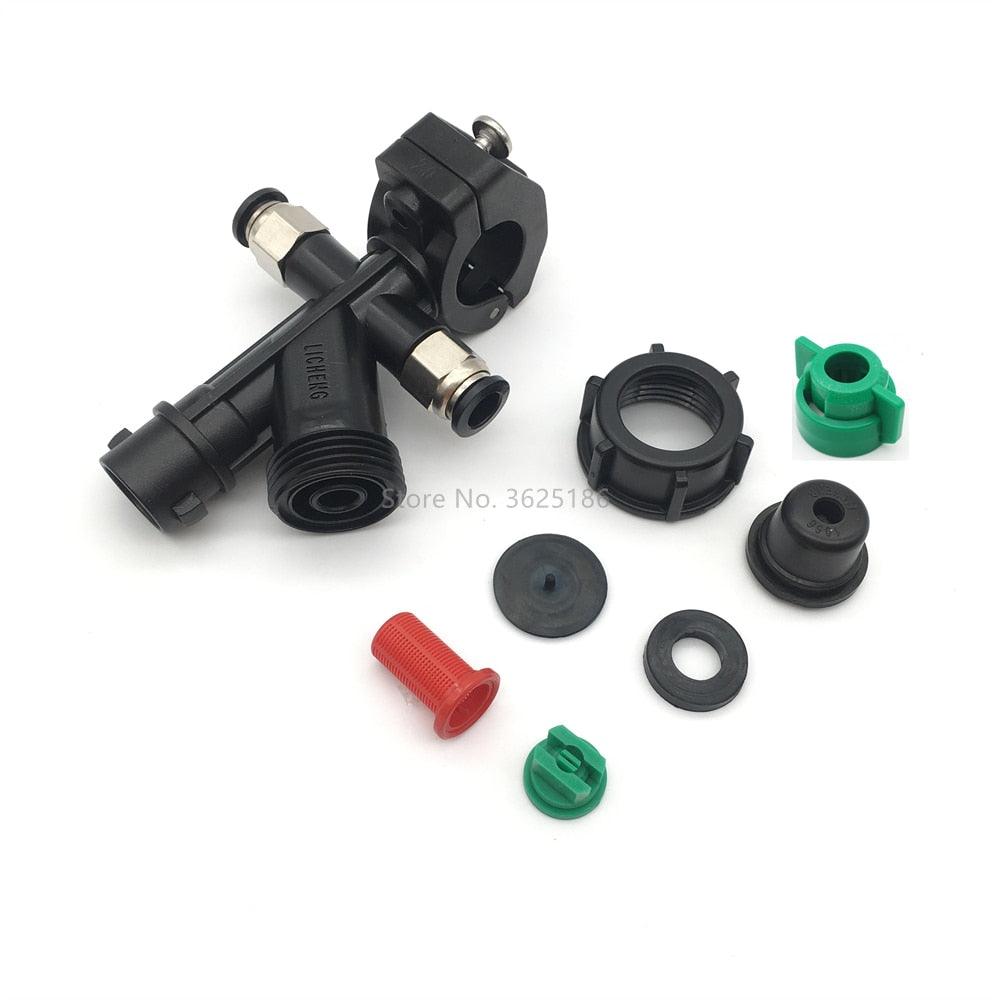
- EFT Y double Nozzle - extended rod pressure double nozzle E616 E416 G616 G620 G630 G420 Agricultural Plant Protection uav Agriculture Sprayer Drone Accessories - $29.39
- Agriculture drone
Skydroid H12 PRO Remote Control for UAV Agricultural Sprayer Drone With 10KM 2K 1080P Video Stream 3-Axis Camera
Price range: $369.00 through $529.00 - 50L Agriculture Drone
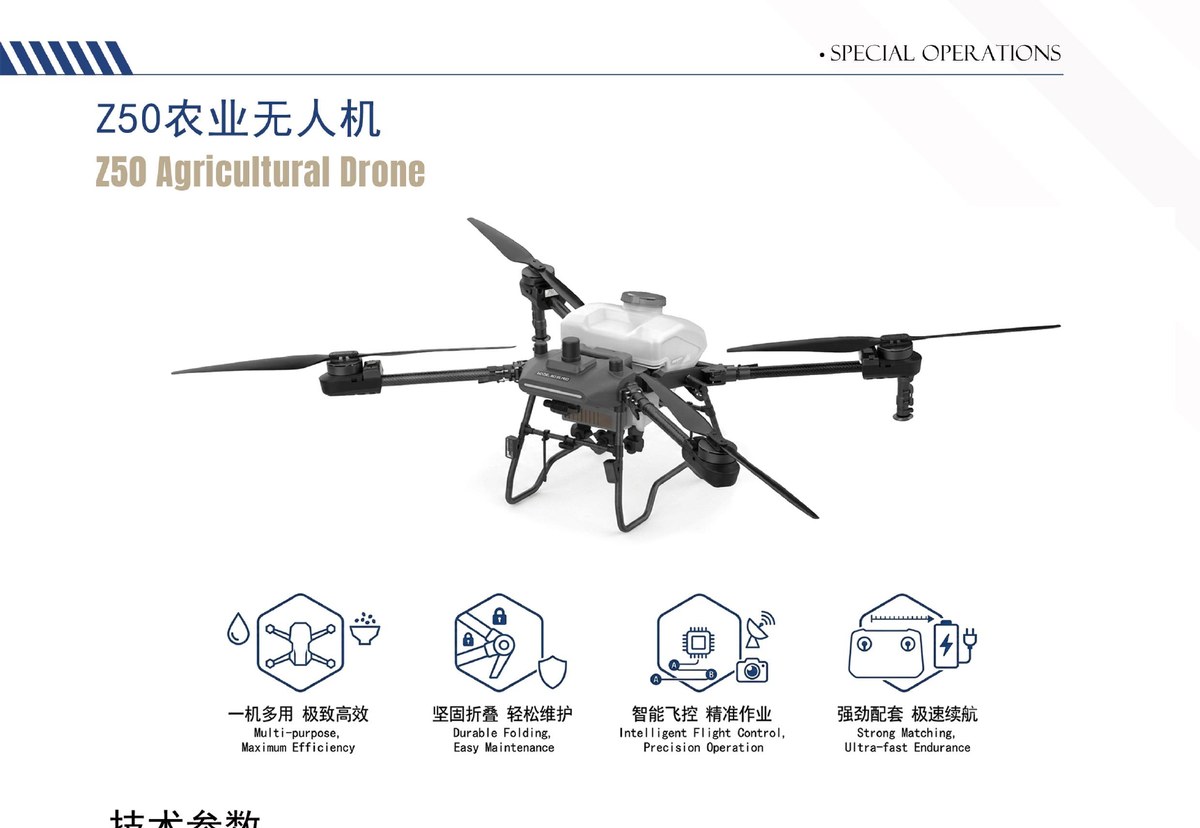
Z50 Agricultural Drone — 106kg Max Take-Off Weight, 55L Spray Tank, IP67
Z50 Agricultural Drone — 106kg max take-off weight, 55L spray tank / 80L material tank, IP67 waterproof, millimeter-wave terrain-following radar with ≤0.5m terrain tracking accuracy, centrifugal nozzles atomizing to 50–500µm, night operation and speed-linked spraying supported. Contact 100drone for pricing.
- Agriculture drone
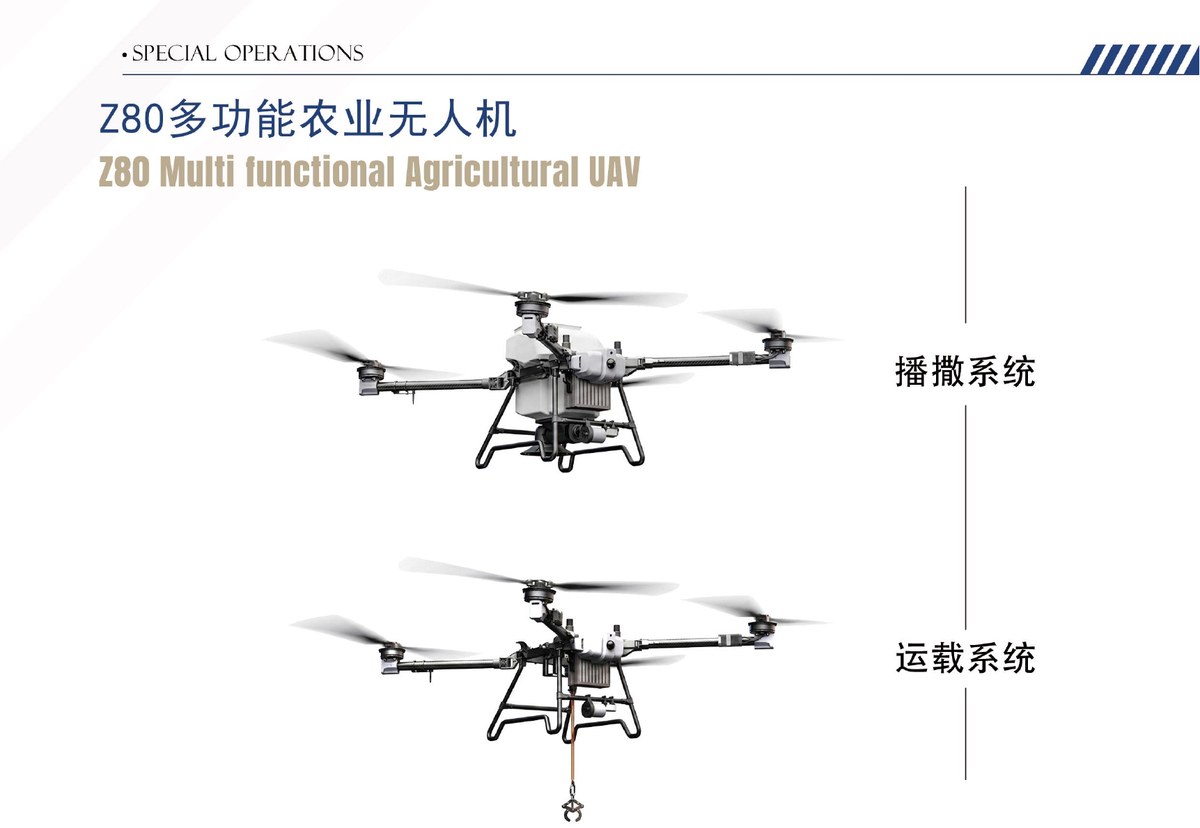
Z80 Multi-functional Agricultural UAV — 141.2kg Rated Take-Off, Spray + Spread Configs
Z80 Multi-functional Agricultural UAV — 141.2 kg rated take-off mass (spray) / 147.2 kg (spread), max take-off <150 kg, RTK hover accuracy of ±10 cm horizontal, 13.8 m/s max flight speed and dual spray / spread configurations. Contact 100drone for pricing.
- Agriculture drone
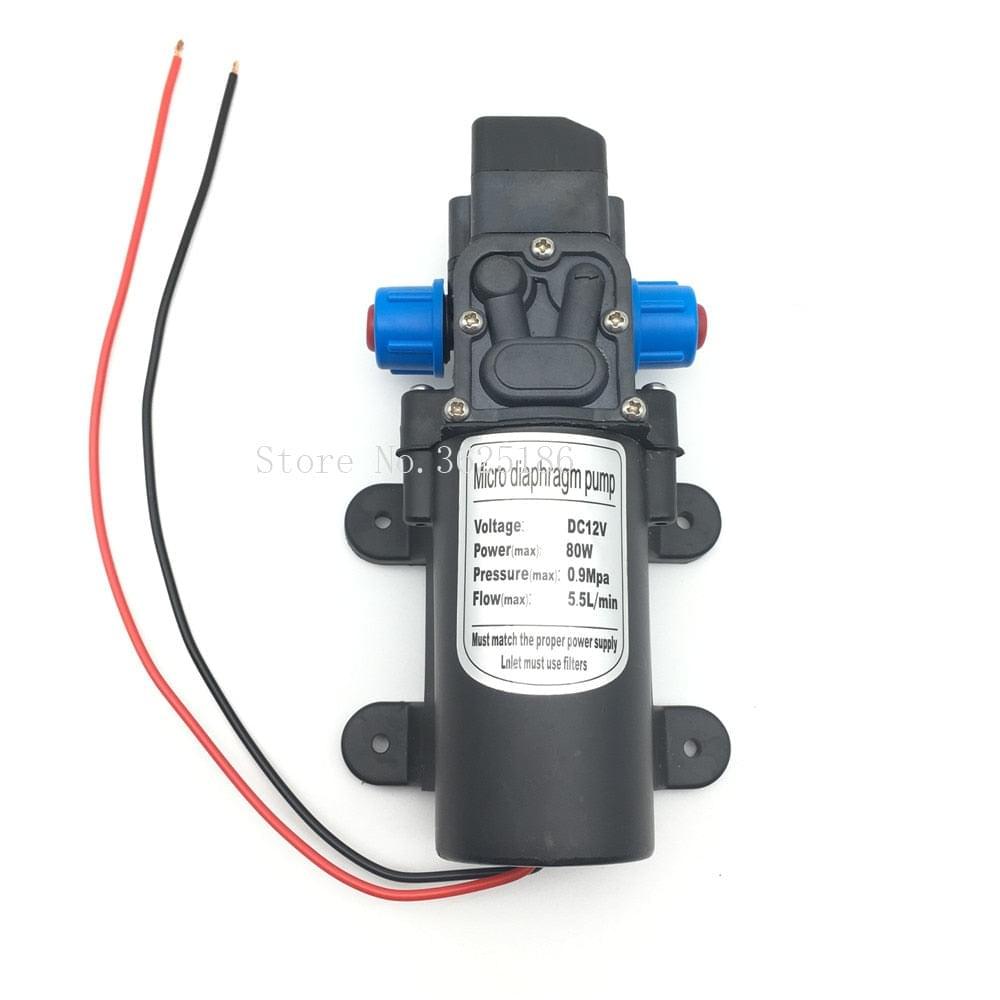
1pcs 12V 80W plant agricultural drone DC brush water pump sprayer diaphragm pump
$19.99
How to choose Agriculture Drone
| Multispectral imaging | Crop health mapping and NDVI analysis, not spraying |
|---|---|
| Spray platform | Liquid application to crops |
| Scouting and mapping | Surveying, plant counting and progress tracking |
| Spreading | Seed and granular fertiliser application |
Compatibility checklist before you buy
- Sensor type: RGB, multispectral and thermal sensors are different instruments for different questions - a thermal camera cannot do NDVI
- Calibration: Multispectral and thermal sensors need radiometric calibration against a reference panel
- Payload mount: The mount has to carry the sensor weight and keep the calibration stable in flight
- GPS accuracy: Mapping outputs depend on accurate positioning; RTK materially improves the result
- Data handling: Spectral imagery produces large datasets that need processing before they are usable
What pilots and builders report in the field
commercialdronepilots.comCommercial operator thread on the mechanical load agricultural platforms place on their airframes, relevant to any sensor or spray payload mounted above the airframe.
discuss.ardupilot.orgForum guidance on building an autonomous farm surveillance drone, including the recommendation to start from an established autopilot platform.
Frequently asked questions
Is a thermal camera the same as a multispectral camera?
No, they answer different questions. A thermal camera measures emitted infrared radiation, which works for water stress and canopy temperature. A multispectral camera measures reflected light in several narrow bands, which is what NDVI and other vegetation indices are computed from. A thermal camera cannot produce NDVI, and a multispectral camera cannot measure temperature.
Why does my multispectral data need calibration?
The camera measures reflected light, and that reading shifts with the ambient light conditions and the camera's own response. Calibration against a reference panel under the actual flight conditions corrects for that. Without it the index values are not comparable between flights, which defeats the purpose of the survey.
Do I need RTK positioning for agricultural mapping?
It makes a material difference. Standard GPS is accurate to a few metres, which is enough to see that a patch of crop is different but not enough to map application overlaps accurately. RTK brings it to centimetre level, which is what makes variable-rate application and repeatable survey passes reliable.
The 60kg Payload Revolution: Why the DJI Agras T60 is the New Gold Standard for Smart Farming
As a senior engineer who has seen the evolution from 10L prototypes to the current 124kg MTOW beasts, the DJI Agras T60 represents a massive leap in operational efficiency. By fusing Active Phased Array Radar with a Trinocular Fisheye Vision system, this drone doesn’t just fly; it perceives. Whether you are managing complex orchards or 1,000-acre broadacre farms, the T60 delivers a 150-200% productivity gain over previous generations, covering up to 50 hectares per hour with surgical precision.
Real-World Use Cases: From Mountain Orchards to Broadacre VRA
The T60 is engineered for two distinct high-stakes environments. In Orchard Mode, the dual-vision radar fusion allows the drone to navigate 30-degree slopes, avoiding power lines and branches that would ground lesser platforms. In Large-Scale Row Cropping, the Variable Rate Application (VRA) system uses multispectral mapping to adjust flow rates on the fly. This means you aren’t just dumping chemicals; you are optimizing every drop, significantly increasing ROI by reducing waste by up to 50%.
Feature
DJI Agras T60 Specification
Max Takeoff Weight (MTOW)
124 kg (Spreading) / 103 kg (Spraying)
Atomization Tech
Dual Centrifugal Atomizing Nozzles
Obstacle Sensing
360° Active Phased Array Radar + Trinocular Vision
Effective Swath Width
Up to 16 Meters
Positioning
RTK-GNSS (Centimeter-level)
Pros and Cons: An Engineer’s Perspective
The Pros: The Centrifugal Atomization system is a game-changer. Unlike traditional Spray Nozzles that clog with thick suspensions, these self-cleaning atomizers allow for 50-500μm droplet adjustment. Furthermore, the Smart Battery Management system, paired with a 9,650W EFI generator, allows for a 9-minute rapid charge, keeping the drone in the air rather than on the trailer.
The Cons: As discussed in recent industry circles (and on Reddit), drones over 55lbs require manual FAA paper registration, which can be a hurdle for beginners. Additionally, while the T60 is highly autonomous, the logistical reality is that it “needs water, needs to land, and needs an operator” for frequent reloads. You must ensure your Water Pumps and mixing stations are as fast as the drone itself to avoid bottlenecks.
Expert Tips for 24/7 Operations
Night Ops: Don’t fear the dark. The Active Phased Array Radar scans the airspace in 0.1s, making night spraying safer than daytime operations in high-heat conditions.
Battery Health: To get the full 1,500 cycles out of your Ag Drone Batteries, utilize the air-cooled heat dissipation during the EFI charging cycle.
Regulatory Awareness: With ongoing debates regarding the “DJI ban” and national security covered lists, always keep your firmware updated and maintain offline logs for compliance.
Frequently Asked Questions
How does the DJI Agras T60 handle complex terrain with its dual-vision radar fusion?
The DJI Agras T60 utilizes Security System 3.0, which fuses dual Active Phased Array Radars with a Trinocular Fisheye Vision system. This 360-degree sensor fusion allows the drone to perceive power lines, branches, and uneven slopes with centimeter-level precision, enabling safe autonomous flight at a Max Takeoff Weight (MTOW) of up to 124kg.
What makes centrifugal atomization the industry standard for 2026 agriculture drones?
Unlike traditional pressure nozzles that clog easily, centrifugal atomizing nozzles are self-cleaning and allow real-time droplet size adjustment between 50-500μm. This technology ensures deep canopy penetration and reduces chemical drift by up to 60%, making it essential for high-precision crop protection.
How does Variable Rate Application (VRA) improve ROI in large-scale drone farming?
VRA leverages multispectral prescription maps to adjust chemical flow rates in real-time based on crop health. In 2026, drones like the T60 can reduce fertilizer and pesticide waste by 30-50%, treating only the zones that require intervention rather than the entire field.
What is the charging efficiency and battery lifespan of the T60?
The 40,000mAh DB2100 smart battery supports ultra-fast 9-12 minute charging when paired with a 9,650W EFI generator. These batteries feature air-cooled heat dissipation and are rated for up to 1,500 cycles, ensuring high operational uptime during peak seasons.