FPV Antenna
Maximize Your Link: High-Gain 5.8GHz & Long Range FPV AntennasIn the world of FPV, your antenna is the most critical link between your goggles and the sky. Whether you are hunting for a 5.8ghz lhcp fpv antenna for your racing quad or a high-gain long range fpv antenna for mountain surfing, the right choice determines if you see a clear image or a screen full of ‘snow.’ Our selection covers everything from ultra-durable readytosky fpv mini antennas to specialized 1.3 ghz fpv antennas for deep penetration.Use-Case Scenarios: Racing vs. Long RangeChoosing an antenna for fpv goggles depends entirely on your flight style. For fpv racing antennas, durability and omnidirectional coverage are key; you need a signal that stays consistent even when the drone is at extreme tilt angles. Conversely, long range antenna fpv setups require directional high-gain patches. If you are pushing 10km+, an antenna 20dbi fpv patch on a tracker is the gold standard, whereas a standard 5.8ghz fpv antenna stubby is perfect for bando bashing.Antenna TypeFrequency RangeBest ForTypical GainOmnidirectional5.8GHz / 2.4GHzRacing & Freestyle2.0 – 2.5 dBiPatch (Directional)5.8GHz / 900MHzLong Range / Cruising8.0 – 14.0 dBiHelical / Parabolic1.3GHz / 5.8GHzExtreme Distance12.0 – 20.0 dBiPro Engineer Tips: Avoiding Signal DropoutsBased on years of field testing, signal issues often aren’t the antenna’s fault alone. Before you swap your 5.8 g fpv antenna, check your VTX output power in your goggle settings; it might be locked in pit mode. We also recommend performing a ‘slow 360 yaw’ during your initial flight to monitor your LQ (Link Quality) and RSSI. If you experience flickering during punch-outs, your VTX might be suffering from voltage sag—consider adding a capacitor to your regulator. Most importantly, ensure your polarization matches! If you use a 5.8ghz lhcp fpv antenna on your drone but an RHCP on your goggles, you will lose up to 30dB of signal. For those building new rigs, check our New FPV Arrivals for the latest VTX/Antenna combos and grab essential Drone Tools for a clean install.Frequently Asked Questions (FAQ)What is an FPV antenna?Antennas used in FPV systems are crucial for video signal exchange and data transmission. They are employed on the transmitter (TX) and receiver (RX) sides, available in linear or circular polarized (LHCP/RHCP) formats.How do I increase the range of my FPV drone?Use High-Gain Antennas. Directional patch antennas provide much higher gain than omnidirectional ones. If your goggles support diversity, use a combination of a Patch and an Omni antenna for the best of both worlds.What are the three types of antennas?The key types include dipole (linear), patch (directional), and helical/parabolic (high-gain). Dipoles are common for basic kits, while patches are the go-to for antenna fpv high gain requirements.Is 16/9 or 4:3 better for FPV?4:3 is generally preferred for FPV flying because it provides more vertical FOV. This is vital when your drone tilts forward, allowing you to see the horizon clearly while speeding up.Does mounting orientation matter?Yes. For max range, antennas should be parallel. If you use a T-antenna on your TX, ensure your RX antennas are oriented to match that polarization plane during flight to avoid ‘null zones.’
- Drone Accessories
820Mhz-960Mhz RPSMA Omnidirectional Antenna 5DBI For XBee PRO 900HP and XTEND Micorhard P900
$20.24 - Drone Transmitter & Receiver
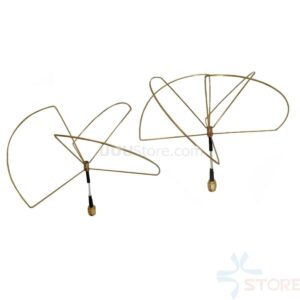
1.2G 3 4 Blades RP-SMA Clover Leaf Antenna Skew Planar for 1.2Ghz Audio Video FPV TX RX
$29.34 - Drone Accessories
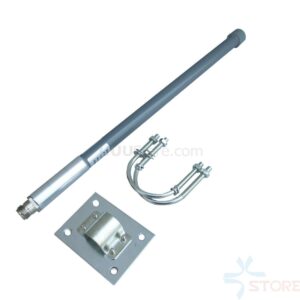
5725-5850Mhz 5.8GHz 12dBi Omni-directional Fiberglass Antenna N-K Connector
Original price was: $199.00.$69.91Current price is: $69.91. - Drone Accessories
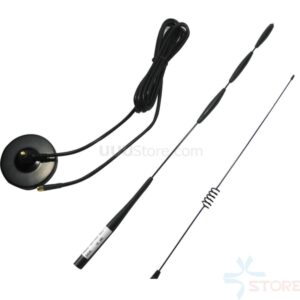
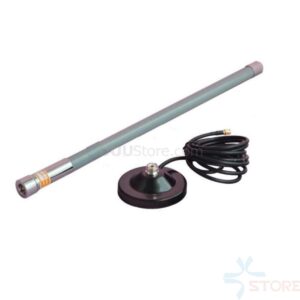
1.2G Antenna 16DB Long 45cm Strong magnetic big sucker fiber glass Antenna with 3M SMA Male cable
$73.86 - Drone Accessories
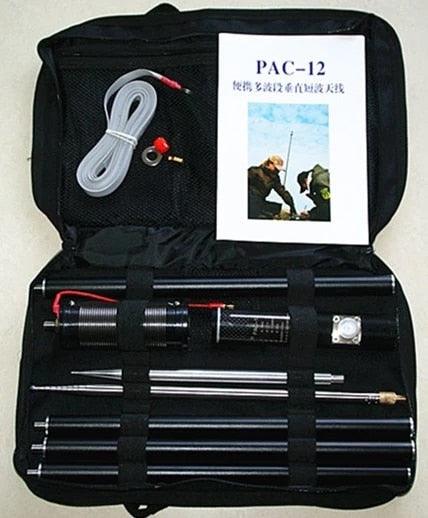
JPC-12 portable short wave antenna pac-12 shortwave antenna field balcony gantry antenna
$161.83 - Drone Accessories
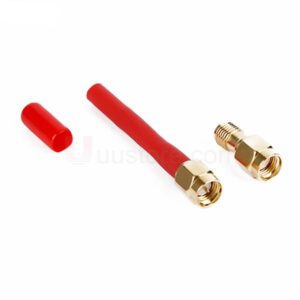
5.8Ghz 2.8dBi SMA male RP-SMA Male Inner Needle Antenna FPV Racer Multicopter For RC Camera Drone
$237.28 - Drone Accessories
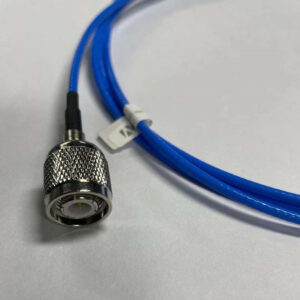
CUAV C-RTK 9P MMCX Change To TNC 4G LTE Link System Antenna Extension Cable
$925.26 - Drone Transmitter & Receiver
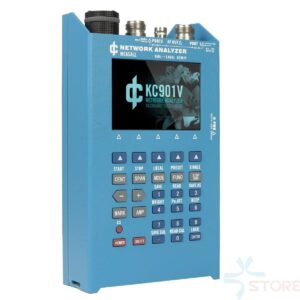
KC901V 6.8GHz Handheld Network Analyzer RF multimeter vector network analyzer day feeder analysis
$2,349.35
How to choose FPV Antenna
| Dipole | Cheapest and most flexible, low gain, fine for close flying |
|---|---|
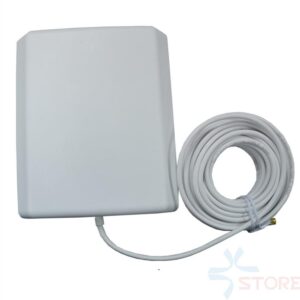
| Patch / directional | Higher gain in one direction, useful to reject interference from behind |
| Omnidirectional | Best when the drone can fly in any direction relative to you |
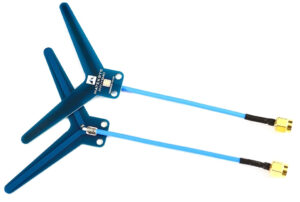
| Diversity set | Two antennas with different polarisation - the standard setup for reliable FPV |
Compatibility checklist before you buy
- Connector: The connector type must match the VTX or receiver - SMA, RP-SMA and MCX are not the same
- Frequency: 5.8GHz antennas do not work on 1.2GHz or 2.4GHz systems
- Polarisation: Two antennas of the same polarisation give less benefit than a cross-polarised pair
- Impedance: Antennas should be 50 ohm to match the VTX output
What pilots and builders report in the field
www.dronetrest.comBeginner build walkthrough that includes the RF link parts, showing how the antenna choice sits alongside the battery and frame decisions rather than being an afterthought.
Frequently asked questions
What is the difference between an SMA and RP-SMA antenna?
They are the same connector body with the centre pin and outer thread swapped, which is exactly what makes them easy to mix up. An SMA antenna on an RP-SMA socket usually makes poor or intermittent contact. Check the socket marking on the VTX or receiver rather than trusting the packaging.
Does a higher-gain antenna always improve my range?
No. A higher-gain antenna concentrates energy in one direction, which helps when the drone flies predictably but can actually lose the link when it flies behind you. For general FPV flying an omnidirectional or diversity pair is the usual choice, and gain is worth it mainly for directional or long-range setups.
Why mount two antennas with different rotation?
Cross-polarising the two diversity antennas means the receiver always has at least one antenna facing the drone correctly, because the two receive the signal with opposite polarity. Pilots report that mounting them roughly 90 degrees apart gives noticeably more stable video, particularly in tight turns.
Maximize Your Link: High-Gain 5.8GHz & Long Range FPV AntennasIn the world of FPV, your antenna is the most critical link between your goggles and the sky. Whether you are hunting for a 5.8ghz lhcp fpv antenna for your racing quad or a high-gain long range fpv antenna for mountain surfing, the right choice determines if you see a clear image or a screen full of ‘snow.’ Our selection covers everything from ultra-durable readytosky fpv mini antennas to specialized 1.3 ghz fpv antennas for deep penetration.Use-Case Scenarios: Racing vs. Long RangeChoosing an antenna for fpv goggles depends entirely on your flight style. For fpv racing antennas, durability and omnidirectional coverage are key; you need a signal that stays consistent even when the drone is at extreme tilt angles. Conversely, long range antenna fpv setups require directional high-gain patches. If you are pushing 10km+, an antenna 20dbi fpv patch on a tracker is the gold standard, whereas a standard 5.8ghz fpv antenna stubby is perfect for bando bashing.Antenna TypeFrequency RangeBest ForTypical GainOmnidirectional5.8GHz / 2.4GHzRacing & Freestyle2.0 – 2.5 dBiPatch (Directional)5.8GHz / 900MHzLong Range / Cruising8.0 – 14.0 dBiHelical / Parabolic1.3GHz / 5.8GHzExtreme Distance12.0 – 20.0 dBiPro Engineer Tips: Avoiding Signal DropoutsBased on years of field testing, signal issues often aren’t the antenna’s fault alone. Before you swap your 5.8 g fpv antenna, check your VTX output power in your goggle settings; it might be locked in pit mode. We also recommend performing a ‘slow 360 yaw’ during your initial flight to monitor your LQ (Link Quality) and RSSI. If you experience flickering during punch-outs, your VTX might be suffering from voltage sag—consider adding a capacitor to your regulator. Most importantly, ensure your polarization matches! If you use a 5.8ghz lhcp fpv antenna on your drone but an RHCP on your goggles, you will lose up to 30dB of signal. For those building new rigs, check our New FPV Arrivals for the latest VTX/Antenna combos and grab essential Drone Tools for a clean install.Frequently Asked Questions (FAQ)What is an FPV antenna?Antennas used in FPV systems are crucial for video signal exchange and data transmission. They are employed on the transmitter (TX) and receiver (RX) sides, available in linear or circular polarized (LHCP/RHCP) formats.How do I increase the range of my FPV drone?Use High-Gain Antennas. Directional patch antennas provide much higher gain than omnidirectional ones. If your goggles support diversity, use a combination of a Patch and an Omni antenna for the best of both worlds.What are the three types of antennas?The key types include dipole (linear), patch (directional), and helical/parabolic (high-gain). Dipoles are common for basic kits, while patches are the go-to for antenna fpv high gain requirements.Is 16/9 or 4:3 better for FPV?4:3 is generally preferred for FPV flying because it provides more vertical FOV. This is vital when your drone tilts forward, allowing you to see the horizon clearly while speeding up.Does mounting orientation matter?Yes. For max range, antennas should be parallel. If you use a T-antenna on your TX, ensure your RX antennas are oriented to match that polarization plane during flight to avoid ‘null zones.’