FPV Monitor
Elevate Your Vision: Choosing the Ultimate FPV Monitor for Your Ground Station
Whether you are a professional cinematic pilot or a hobbyist building your first setup, the right FPV monitor is the window into your drone’s soul. While goggles offer immersion, a dedicated 5.8GHz FPV monitor provides the situational awareness and spectator-friendly viewing that goggles simply can’t match. From the compact Skyzone M5 analog FPV monitor to massive 10 inch FPV monitor setups, the choice depends on your specific mission profile.
Comparison: Top FPV Monitor Specs
Monitor Type
Size
Frequency
Best For
Skyzone M5
5 Inch
5.8GHz Analog
Portability & Low Latency
Black Pearl FPV Monitor
7 Inch
5.8GHz Diversity
Reliable Signal Strength
DMKR FPV Monitor
Varied
5.8GHz
Budget-Friendly Entry
Digital FPV Monitor
Varies
HD Digital
High-Definition Clarity
Pro Engineer’s Insight: Solving Common Pilot Pain Points
As a senior engineer, I often see pilots struggling with technical hurdles mentioned on Reddit, such as “battery longevity issues” and signal flickering. To ensure your monitor doesn’t die mid-flight, I recommend powering your ground station with a high-discharge 100C Lipo Battery. This provides the consistent voltage required for high-brightness screens.
Another common issue is the “black screen” or distorted image, which is often a simple PAL/NTSC mismatch between your camera and DVR. Always check your settings! If you are building a custom rig using a FPV Frame Kit, ensure your antenna pigtails are secure. Having a reliable set of Drone Tools on hand is essential for field repairs when your 7 inch FPV monitor loses signal due to a loose MMCX connector.
Frequently Asked Questions
What is the meaning of FPV monitor?
First-person view (FPV), also known as remote-person view (RPV), is a method used to control a radio-controlled vehicle from the pilot’s viewpoint. The monitor displays the live feed from the drone’s onboard camera.
Why do FPV pilots use goggles instead of monitors?
Goggles are used to get a better, more immersive view of the video feed. They eliminate sunlight glare and provide a more focused piloting experience compared to a drone FPV monitor.
Is 16:9 or 4:3 better for FPV?
4:3 is generally preferred for FPV flying because it provides more vertical Field of View (FOV). This is crucial when the drone tilts forward during high-speed flight, allowing you to see the horizon more clearly.
Does FPV through a monitor count as Line of Sight (LOS)?
Technically, no. To maintain visual line of sight (VLOS) for FAA compliance, you must be able to see the aircraft with your own eyes. Using a monitor or goggles means you are focused on the video feed, not the physical aircraft.
Can FPV drones fly at night?
Yes, provided you have the correct anti-collision lighting visible for three statute miles. For night ops, a best FPV monitor with high contrast and brightness is vital for navigating low-light environments.
Finding the Right Fit
If you are looking for a cheap FPV monitor to get started, or a high-end DJI FPV monitor for crystal clear digital video, always prioritize low latency. A DIY FPV monitor can be a fun project, but for racing, the 5.8 ghz FPV monitor remains the industry standard for its near-zero lag and reliability.
Top products in FPV Monitor
- FPV Monitor
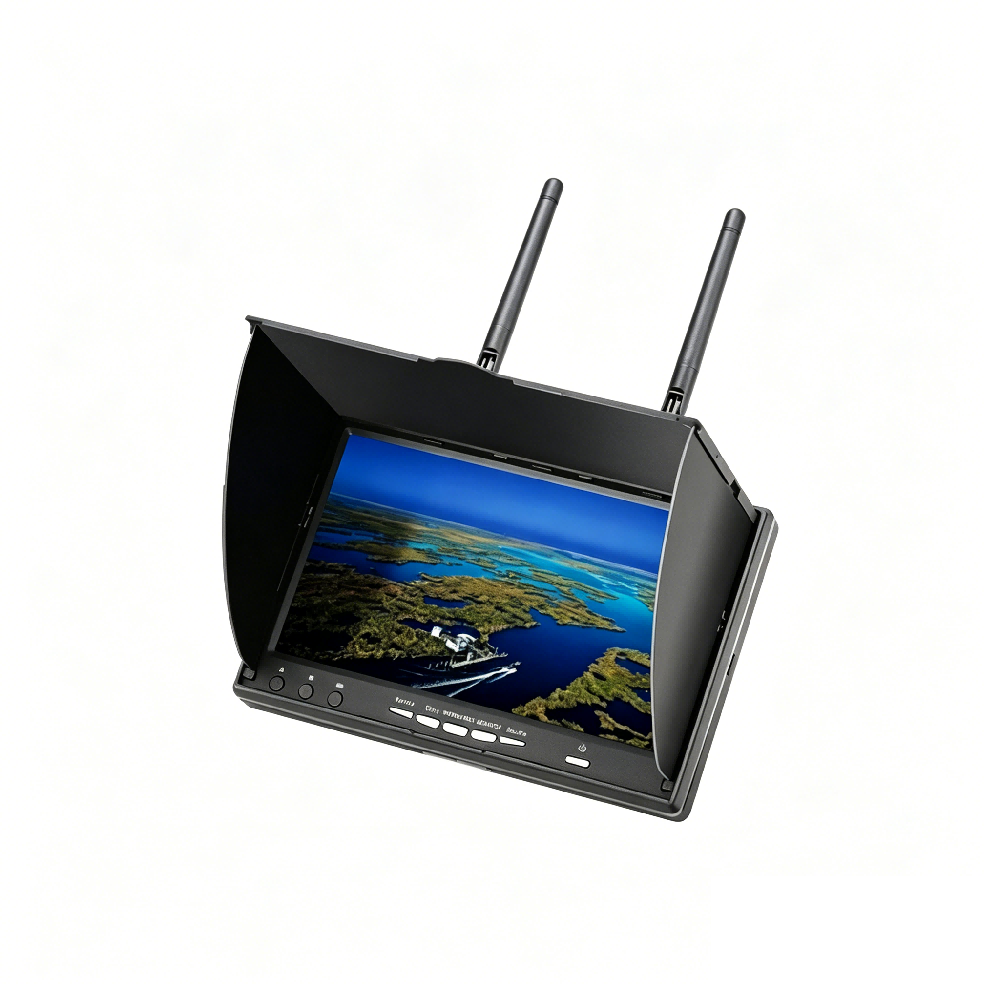
5.8GHz FPV Monitor with DVR & Built-in Battery for Drones
$107.995.8GHz FPV Monitor with DVR & Built-in Battery for Drones. Price reference: GetFPV. price source
Elevate Your Vision: Choosing the Ultimate FPV Monitor for Your Ground Station
Whether you are a professional cinematic pilot or a hobbyist building your first setup, the right FPV monitor is the window into your drone’s soul. While goggles offer immersion, a dedicated 5.8GHz FPV monitor provides the situational awareness and spectator-friendly viewing that goggles simply can’t match. From the compact Skyzone M5 analog FPV monitor to massive 10 inch FPV monitor setups, the choice depends on your specific mission profile.
Comparison: Top FPV Monitor Specs
Monitor Type
Size
Frequency
Best For
Skyzone M5
5 Inch
5.8GHz Analog
Portability & Low Latency
Black Pearl FPV Monitor
7 Inch
5.8GHz Diversity
Reliable Signal Strength
DMKR FPV Monitor
Varied
5.8GHz
Budget-Friendly Entry
Digital FPV Monitor
Varies
HD Digital
High-Definition Clarity
Pro Engineer’s Insight: Solving Common Pilot Pain Points
As a senior engineer, I often see pilots struggling with technical hurdles mentioned on Reddit, such as “battery longevity issues” and signal flickering. To ensure your monitor doesn’t die mid-flight, I recommend powering your ground station with a high-discharge 100C Lipo Battery. This provides the consistent voltage required for high-brightness screens.
Another common issue is the “black screen” or distorted image, which is often a simple PAL/NTSC mismatch between your camera and DVR. Always check your settings! If you are building a custom rig using a FPV Frame Kit, ensure your antenna pigtails are secure. Having a reliable set of Drone Tools on hand is essential for field repairs when your 7 inch FPV monitor loses signal due to a loose MMCX connector.
Frequently Asked Questions
What is the meaning of FPV monitor?
First-person view (FPV), also known as remote-person view (RPV), is a method used to control a radio-controlled vehicle from the pilot’s viewpoint. The monitor displays the live feed from the drone’s onboard camera.
Why do FPV pilots use goggles instead of monitors?
Goggles are used to get a better, more immersive view of the video feed. They eliminate sunlight glare and provide a more focused piloting experience compared to a drone FPV monitor.
Is 16:9 or 4:3 better for FPV?
4:3 is generally preferred for FPV flying because it provides more vertical Field of View (FOV). This is crucial when the drone tilts forward during high-speed flight, allowing you to see the horizon more clearly.
Does FPV through a monitor count as Line of Sight (LOS)?
Technically, no. To maintain visual line of sight (VLOS) for FAA compliance, you must be able to see the aircraft with your own eyes. Using a monitor or goggles means you are focused on the video feed, not the physical aircraft.
Can FPV drones fly at night?
Yes, provided you have the correct anti-collision lighting visible for three statute miles. For night ops, a best FPV monitor with high contrast and brightness is vital for navigating low-light environments.
Finding the Right Fit
If you are looking for a cheap FPV monitor to get started, or a high-end DJI FPV monitor for crystal clear digital video, always prioritize low latency. A DIY FPV monitor can be a fun project, but for racing, the 5.8 ghz FPV monitor remains the industry standard for its near-zero lag and reliability.
