
Drone Motors & Propellers
Unlock Peak Performance: Why Your Drone Motor and Propeller Choice Defines Your Flight
Stop guessing your thrust-to-weight ratio. Whether you’re building a 5-inch racer or a cinematic rig, the synergy between your drone motor and propeller determines everything from voltage sag to cornering precision. Choosing a high-quality brushless motor drone propeller setup isn’t just about speed; it’s about finding the efficiency sweet spot that keeps your Lipo Batteries from puffing while giving you the punch needed to pull out of a dive.
Use-Case Scenarios: Racing vs. Long Range
In the FPV world, your mission dictates your hardware. For racing, you need high KV propeller motors for drones paired with aggressive tri-blades for maximum grip in the corners. Conversely, for Long Range, efficiency is king. We recommend lower KV motors with larger, 2-blade drone propellers and motors to minimize amp draw and extend your range beyond the 10km mark.
Drone Type
Motor Size/KV
Propeller Pitch
Target Battery
5″ Freestyle
2207 / 1950KV
5×4.3×3
6S Lipo
Cinewhoop
1404 / 4500KV
D63 Ducted
4S Lipo
Long Range 7″
2806.5 / 1300KV
7x4x2
6S Li-Ion
Expert Engineering Tips: Troubleshooting Common Issues
The “Slipping Prop” Nightmare: If you notice your motor and propeller for drone setup isn’t generating lift even though the motor is spinning, check your prop nuts. As many pilots on Reddit have noted, if it’s “super easy to get the propeller off,” your locknut is likely stripped or not tightened against the prop hub.
ESC vs. Motor Issues: If a motor isn’t spinning correctly, rule out the ESC (Speed Controllers) by swapping the suspect motor with a known working one on the drone. If the issue moves with the motor, you’ve found your culprit.
Directional Safety: Always ensure the leading edge of your Compatible Propellers faces the direction of rotation. Never try to grab a spinning drone to turn it off; use your disarm switch to avoid serious injury.
Pros and Cons of Brushless Systems
Pros: High efficiency, extreme durability, and the ability to handle high voltage without burning out. Propel drone motors in the brushless category offer significantly better thrust-to-weight ratios than brushed alternatives.
Cons: Requires a dedicated ESC, higher initial drone motor and propeller price, and complex wiring for beginners.
Frequently Asked Questions
What are the propellers of a drone?
A propeller is a device used to generate thrust for lift and manoeuvrability. Choosing the right drone motor with propeller combination involves evaluating pitch, diameter, and motor KV to maximize efficiency and flight time.
What kind of motor is used in drones?
Most modern FPV and GPS drones use brushless motors. They are preferred for their high efficiency, longevity, and minimal maintenance compared to brushed motors.
How to choose the right motor for a drone?
The weight and size of your drone are the primary factors. Heavier drones require more powerful motors. Use a drone motor propeller calculator to ensure your motor can provide at least a 2:1 thrust-to-weight ratio for stable flight, or 5:1 for racing.
Which is faster, a 3 or 4 blade prop?
Generally, a 3-blade propeller provides a higher top speed due to less drag. While a 4-blade prop offers more “grip” and smoother handling, it often results in lower top-end speeds and higher battery consumption.
- Airplane Motor
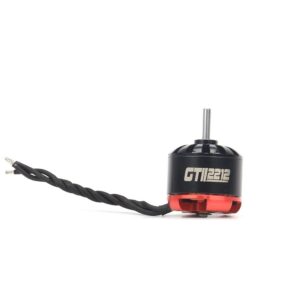
Emax GTII-2212C Brushless Motor – 1000kv 1400kv 2450kv for RC Airplane FPV Racing Drone
Price range: $45.64 through $65.21 - Airplane Motor
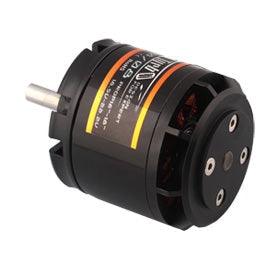
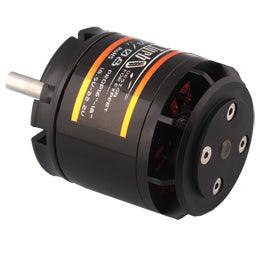
EMAX GT4020 Motor – for Rc Airplane FPV Racing Drone 620KV
Price range: $48.04 through $59.27
 English
  Russian
  German
  Arabic