
Betafpv Motor
Frequently Asked Questions About BetaFPV Power Systems
When deciding which motor is best for making a drone, Brushless DC Motors (BLDC) are the industry standard. These motors consist of a stator, rotor, and an ESC, eliminating the friction-heavy brushes found in older tech. BetaFPV, a leader in this space, was founded in 2017 by Mr. Chen Zeli and Mr. Nie Yong in Shenzhen, China. While BetaFPV offers a wide range, some pilots ask what the best tiny whoop motor is; currently, the RCINPower 0702 and 0703 are highly regarded for lightweight racing, though BetaFPV 0802 motors remain a staple for reliability. Choosing the right KV is also critical: for a 1.5–2 inch TinyWhoop, you should aim for 18,000–25,000KV, whereas 5-inch freestyle builds require 1700–2000KV. Always remember the 1 to 1 safety rule, keeping a lateral distance from people equal to your flight height. Ultimately, BLDC motors are superior to brushed DC motors because they offer precision, space-saving designs, and better energy efficiency.
Comparing BetaFPV Brushless Motors: Performance and Use-Cases
Selecting the right motor for your micro build often feels like a balancing act between weight and raw power. The BetaFPV 0802 motors are the gold standard for 65mm whoops, but it appears to be a common trend for pilots to experiment with the BetaFPV 0603 motors for ultra-lightweight indoor builds. If you are moving up to a 75mm or 2S build, the BetaFPV 1102 brushless motors offer a significant boost in authority. However, some data may suggest that the BetaFPV 1103 motors provide a more stable platform for toothpick-style frames. When you are assembling a new FPV Frame Kit, the choice between an 1105 and a 1204 motor can drastically change your flight envelope; the 1204s generally offer more torque for carrying heavier action cameras.
For those pushing the limits of the micro category, the BetaFPV 1505 motor is a powerhouse. It is designed for 4-inch builds where a standard Hobbywing ESC might be used to manage the higher current draw. While some budget alternatives exist, they often lack the manufacturing tolerances seen in the BetaFPV 0805 brushless motor or the specialty 08028 variants. In a hypothetical user scenario, a pilot building a Meteor75 might find that the stock 0802s are perfect for agility, but switching to a higher KV motor may suggest a need for better battery management to avoid sag.
Pro Tip: Always double-check your betafpv 1103 motor screws before your first flight. If the screws are too long, they can touch the motor windings and cause a short circuit, instantly frying your flight controller. A tiny drop of blue Loctite can prevent mid-air motor bell losses.
Troubleshooting Common BetaFPV Motor Issues
Community feedback from Reddit highlights several recurring challenges. A common frustration occurs when all 4 motors spin same direction betafpv; this is almost always a configuration issue in Betaflight rather than a hardware defect. If a motor feels ‘gummy’ or resistant when pushed by hand, it may suggest a bent motor bell or dirt trapped in the magnets. Unlike the robust structure of a DJI Propeller, micro props are easily deformed, which can lead to excessive vibration and betafpv 2s motor heat. If your motors are coming down too hot to touch, check your filtering settings and ensure your props aren’t hitting the frame ducts. For those looking for a deep dive, a betafpv 1103 motor review often points out that while they are punchy, they require careful PID tuning to avoid oscillations on 2S power.
- Betafpv Motor
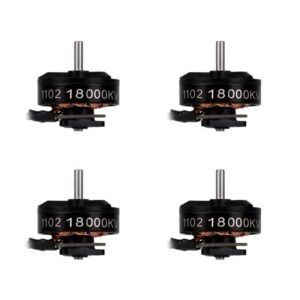
BETAFPV 1102 Motor – 18000KV with 37mm 50mm Cable Brushless Motors with M1.4*4 Screws
Price range: $31.67 through $79.69 - Betafpv Motor
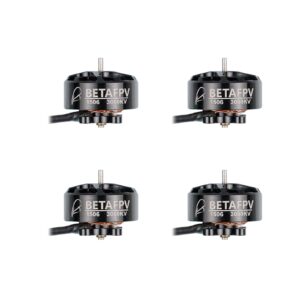
BETAFPV 1506 3000KV Brushless Motors – Pavo30 Whoop Quadcopter Racing Drone Motor Match With 20A Toothpick F4 AIO FC
Price range: $41.61 through $109.62
 English
  Russian
  German
  Arabic