Multirotor Motor
Choosing the Right Brushless Multirotor Motor: Power Meets Precision
As a senior FPV engineer, I’ve seen countless builds fail because the brushless multirotor motor wasn’t properly matched to the airframe or speed controller. Whether you are looking for a high-speed 2306 1000kv bldc motor multirotor or a heavy-lifting ML4114 330kv brushless motor for DJI S800 S1000, understanding the physics of thrust and torque is non-negotiable. Using a multirotor motor calculator is the first step, but real-world reliability comes from quality components.
Before you mount your motors to your FPV Frame Kit, you must calculate your power-to-weight ratio. A standard 5-inch racer might require a 600 gram thrust multirotor motor for agility, while a professional cinema rig often demands a 1 kilogram thrust multirotor motor per arm to maintain stability in adverse wind conditions.
Comparison: Popular Multirotor Motor Classes
Motor Type
KV Rating
Target Thrust
Best Application
2306 BLDC
1000kv – 2700kv
600g – 1.1kg
Freestyle / Racing
ML4114 Brushless
330kv
1.5kg – 2.8kg
Heavy Lift (S800/S1000)
620kv Multirotor
620kv
800g – 1.3kg
Long Range / Endurance
Solving Common Pilot Pain Points: From Desync to Dust
A frequent issue reported by the community is the “full throttle twitch.” If your motor works fine at low power but twitches and beeps when you punch the throttle, you are likely experiencing an ESC desync. To prevent this, I highly recommend using a high-performance Hobbywing ESC, which offers superior timing synchronization compared to older tech like the afro esc 30amp opto multirotor motor speed controller.
Furthermore, if you are operating in dusty environments, bearing wear is your biggest enemy. Using a 16mm multirotor motor mount with proper dampening and pairing your setup with a balanced DJI Propeller can significantly reduce the mechanical stress that leads to premature failure. Brands like Cobra multirotor motors have long been favored for their ruggedness in these harsh conditions.
Frequently Asked Questions
What are the disadvantages of a brushless motor?
The primary challenges are the higher upfront cost and the complexity in design. The electronic controls required for operation introduce more points of failure compared to simple brushed designs.
Which is better: BLDC or PMSM motor?
PMSM motors generally provide higher and smoother torque with lower noise and higher power density. This makes PMSM superior to BLDC in terms of pure performance and size reduction.
What is the lifespan of a brushless motor?
Brushless motors are incredibly durable, often boasting a life expectancy of 10,000 hours, whereas brushed motors typically only last 2,000 to 5,000 hours due to brush wear.
Why do brushless motors fail?
The leading causes of failure include overheating, bearing wear from contamination, electrical overstress, and poor controller (ESC) design.
Are brushless motors noisy?
While known for smooth operation, they can produce “abnormal noise” if there are issues with the bearing, magnets, or if the ESC timing is not correctly tuned.
Top products in Multirotor Motor
- Drone Motors and Propellers
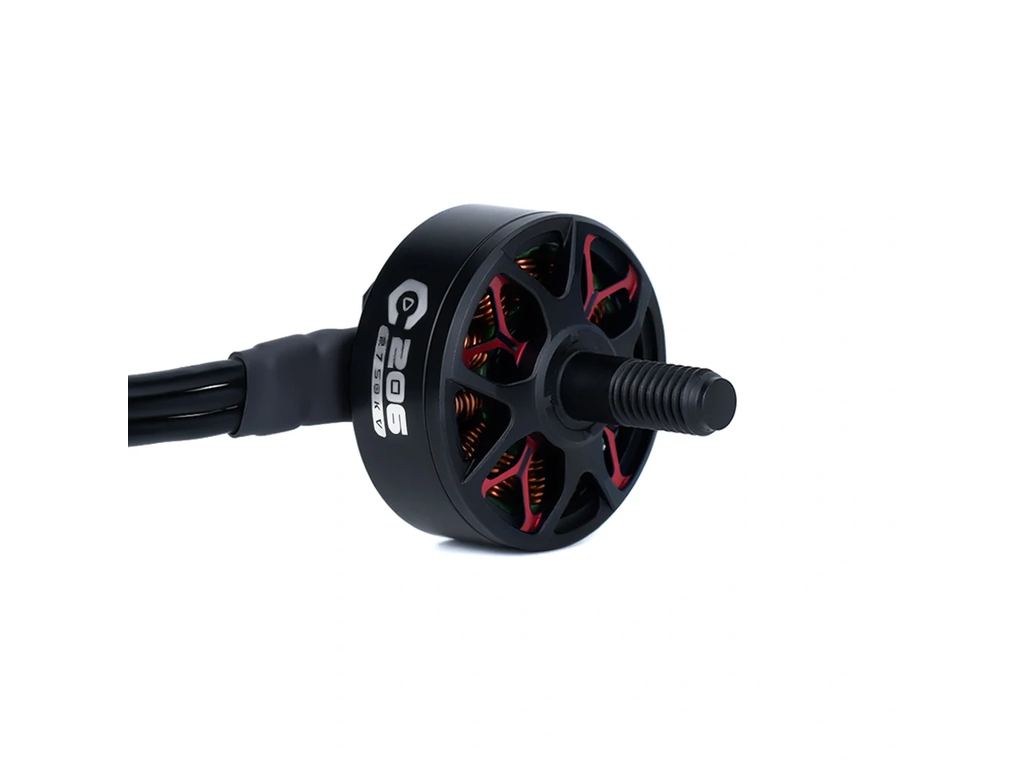
Axisflying C206 2006 2750KV FPV Brushless Motor
$15.99A 20×06 2750KV FPV brushless motor with a 2006 stator, 1.5 mm shaft and T-mount pattern for 4–6S builds.
Choosing the Right Brushless Multirotor Motor: Power Meets Precision
As a senior FPV engineer, I’ve seen countless builds fail because the brushless multirotor motor wasn’t properly matched to the airframe or speed controller. Whether you are looking for a high-speed 2306 1000kv bldc motor multirotor or a heavy-lifting ML4114 330kv brushless motor for DJI S800 S1000, understanding the physics of thrust and torque is non-negotiable. Using a multirotor motor calculator is the first step, but real-world reliability comes from quality components.
Before you mount your motors to your FPV Frame Kit, you must calculate your power-to-weight ratio. A standard 5-inch racer might require a 600 gram thrust multirotor motor for agility, while a professional cinema rig often demands a 1 kilogram thrust multirotor motor per arm to maintain stability in adverse wind conditions.
Comparison: Popular Multirotor Motor Classes
Motor Type
KV Rating
Target Thrust
Best Application
2306 BLDC
1000kv – 2700kv
600g – 1.1kg
Freestyle / Racing
ML4114 Brushless
330kv
1.5kg – 2.8kg
Heavy Lift (S800/S1000)
620kv Multirotor
620kv
800g – 1.3kg
Long Range / Endurance
Solving Common Pilot Pain Points: From Desync to Dust
A frequent issue reported by the community is the “full throttle twitch.” If your motor works fine at low power but twitches and beeps when you punch the throttle, you are likely experiencing an ESC desync. To prevent this, I highly recommend using a high-performance Hobbywing ESC, which offers superior timing synchronization compared to older tech like the afro esc 30amp opto multirotor motor speed controller.
Furthermore, if you are operating in dusty environments, bearing wear is your biggest enemy. Using a 16mm multirotor motor mount with proper dampening and pairing your setup with a balanced DJI Propeller can significantly reduce the mechanical stress that leads to premature failure. Brands like Cobra multirotor motors have long been favored for their ruggedness in these harsh conditions.
Frequently Asked Questions
What are the disadvantages of a brushless motor?
The primary challenges are the higher upfront cost and the complexity in design. The electronic controls required for operation introduce more points of failure compared to simple brushed designs.
Which is better: BLDC or PMSM motor?
PMSM motors generally provide higher and smoother torque with lower noise and higher power density. This makes PMSM superior to BLDC in terms of pure performance and size reduction.
What is the lifespan of a brushless motor?
Brushless motors are incredibly durable, often boasting a life expectancy of 10,000 hours, whereas brushed motors typically only last 2,000 to 5,000 hours due to brush wear.
Why do brushless motors fail?
The leading causes of failure include overheating, bearing wear from contamination, electrical overstress, and poor controller (ESC) design.
Are brushless motors noisy?
While known for smooth operation, they can produce “abnormal noise” if there are issues with the bearing, magnets, or if the ESC timing is not correctly tuned.
