
Understanding the Impact of the russian Stealth Drone Incident
# Russian Stealth Drone Shot Down Over Ukraine: What Happened, Why It Matters, and What “Stealth” Really Means
**Last Updated:** December 28, 2025
**By:** 100drone (Research Desk)
People searching for **“Russian stealth drone shot down”** usually want three things fast:
1) **Which drone was it?**
2) **Who shot it down (and why)?**
3) **How can a “stealth” aircraft still get detected and hit?**
This article answers those questions using **publicly available reporting, official statements where available, and technical fundamentals** (radar, infrared sensing, and command-and-control reality). Because this involves an active conflict, some details remain disputed or unconfirmed—so we separate **what’s well-supported** from **what’s still uncertain**.
—
## The 30-Second Summary
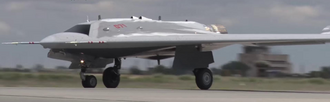
A **large Russian flying-wing “stealth” combat drone**—widely identified as the **Sukhoi S-70 “Okhotnik-B” (Hunter-B)**—came down near **Kostiantynivka/Kostyantynivka in Ukraine’s Donetsk region** in **early October 2024**.
Multiple open-source analyses and Western reporting assessed that **Russia likely destroyed its own drone** after losing control, to prevent sensitive technology from being recovered. Imagery from the crash site suggested the wreckage was **significant enough to be an intelligence prize**—even if it was damaged or partially burned.
That single event matters because it highlights a blunt truth:
**“Stealth” reduces detection and tracking quality—it does not guarantee immunity, especially when control links, mission planning, or operational discipline break down.**
—
## What We Know vs. What We Don’t
| Category | What’s reasonably well supported | What remains uncertain |
|—|—|—|
| Identity | A flying-wing heavy UCAV widely identified as **S-70 Okhotnik-B** | Exact tail number / prototype designation |
| Location | Crash/impact near **Kostiantynivka (Donetsk region)** | Exact flight path and origin airfield |
| Cause | Strong indications of **destruction in-flight** (damage/smoke seen before impact) | Whether it was **Russian “friendly fire,” Ukrainian air defenses, technical failure**, or some combination |
| Mission | Likely a trial/operational sortie; imagery suggested **a strike payload may have been carried** | Whether this was a deliberate combat test or a test flight gone wrong |
| Strategic impact | Wreckage recovery can yield **materials, manufacturing clues, electronics, datalink components** | How much was recovered intact, and what it reveals |
—
## What Is a “Russian Stealth Drone” in This Context?
The phrase **“Russian stealth drone”** is often used loosely online. In most serious reporting, it usually points to the **S-70 Okhotnik-B**, a **fighter-sized unmanned combat air vehicle** (UCAV) with a flying-wing layout designed to reduce radar signature.
Think of the Okhotnik as part of a broader global trend sometimes described as:
– **UCAV** (unmanned strike/recon aircraft with weapons capacity), and/or
– **manned-unmanned teaming** (UAV operating alongside a manned fighter), and/or
– **“loyal wingman”** concepts (unmanned aircraft extending sensors, acting as decoys, or carrying weapons).
### Publicly Reported (Approximate) S-70 “Okhotnik-B” Profile
Open sources commonly describe the S-70 as a **large flying-wing** platform with a wingspan around the **~20 m / 65 ft class**, intended for **reconnaissance and strike** and potentially working with the **Su-57** fighter.
Because Russia has not published a full, authoritative public spec sheet, **exact performance figures vary by source**. Treat any single-number claims (range, speed, payload) as estimates unless backed by official documentation.
—
## The Incident: What Likely Happened in Early October 2024
Open imagery and reporting indicated a large UAV was seen **descending with visible damage/smoke** before crashing in Ukrainian-controlled territory near Kostiantynivka. What made this incident unusually high-profile was not just that a stealth-associated UAV was lost—it was the widespread assessment that **Russia may have intentionally destroyed it** to avoid capture.
Why would a military do that?
Because in modern defense systems, the “airframe” is only half the value. The rest is often **materials science, embedded electronics, secure communications, sensors, and integration know-how**—the parts you cannot easily infer from a photo.
—
## The Key Question: How Can a “Stealth” Drone Be Detected and Hit?
“Stealth” does **not** mean invisible. It means **harder to detect early** and **harder to track accurately enough** for a clean engagement—especially at long range, in certain radar bands, and from certain angles.
In real combat environments, defenders don’t rely on one sensor. They build **layers**.
### 1) Stealth Is Optimized Against Certain Threats, Not All Sensors
Low-observable shaping and coatings primarily reduce returns against **specific radar bands and geometries**. If an aircraft is detected by a sensor that isn’t “the one it was optimized against,” the stealth advantage can be reduced.
### 2) Passive Sensing and Multi-Sensor Fusion Change the Game
Modern air defense environments may fuse:
– **Radar**
– **Electro-optical (EO) cameras**
– **Infrared sensing (IR)**
– **Signals intelligence (emissions detection)**
– **Networked cueing** from other sensors
This is why “stealth got shot down” headlines aren’t automatically contradictory. If a target is detected late—but detected *enough*—that can still be sufficient for an engagement, especially if it flies through predictable corridors or is forced into a degraded flight state.
### 3) Infrared Detection Still Matters (Especially for Jet-Powered Aircraft)
Even when radar signature is reduced, **heat is physics**. Turbine exhaust, skin friction heating, and power management can create infrared cues—conditions and geometry matter, but IR sensing is a real part of modern detection ecosystems.
### 4) Electronic Warfare and Control-Link Problems Can Be Fatal
For unmanned aircraft, losing or degrading command-and-control can create a chain reaction:
– navigation fallback modes
– predictable routes or loiter patterns
– altitude/heading stability that becomes trackable
– increased exposure time
A stealthy aircraft forced into a long, predictable profile can be far easier to engage than one executing a disciplined mission plan.
### 5) Close-Range Engagement Changes the Odds
At shorter ranges, more options appear—visual tracking, EO cueing, short-range missiles, and point-defense systems. “Stealth” buys time and uncertainty; it doesn’t erase the threat.
—
## The Most Controversial Angle: Did Russia Shoot Down Its Own Drone?
Many analysts and at least one Western intelligence assessment suggested Russia likely made a decision to **destroy the aircraft** when control was lost, to prevent advanced technology from being recovered.
This logic is not unprecedented. In sensitive programs, the risk isn’t simply the enemy seeing your aircraft—it’s the enemy **studying what’s inside**, then adapting countermeasures or accelerating their own designs.
That said, the public record still contains uncertainties:
– Russia did not publicly provide a detailed incident narrative.
– Ukrainian air defenses were (and are) active and capable.
– mechanical or control failure is always a possibility, especially in test/limited-series platforms.
The strongest, most careful conclusion is:
**The incident is widely assessed as a likely deliberate shootdown/destruction event, but complete confirmation is limited in public sources.**
—
## Why Wreckage Recovery Matters More Than Most People Think
A downed stealth UAV can offer insight into:
– **materials and coatings** (how they’re applied, what they appear to be optimized for)
– **internal structure and manufacturing methods**
– **avionics layout and cooling**
– **antenna placement and datalink architecture**
– **sensor apertures and potential payload integration**
– **supply chain fingerprints** (components, origins, and substitutions)
Even partial wreckage can be valuable. And in modern wars, the intelligence race often continues after the crash—sometimes for months—through analysis, exploitation, and countermeasure development.
—
## What This Tells Us About the Future of Stealth UCAVs (2025 Outlook)
This incident—regardless of the exact final cause—highlights pressures shaping next-generation unmanned aircraft:
### 1) Autonomy Must Be Matched With Reliability
As autonomy increases, systems must remain robust under:
– degraded comms
– jamming
– GPS denial
– partial sensor failure
– unexpected weather or icing conditions
### 2) Secure Datalinks and Failure Modes Are “Stealth” Too
The quietest aircraft can still fail if its control architecture forces predictable behavior after a link loss. Modern designs increasingly treat:
– link security,
– navigation resilience,
– and fail-safe logic
as part of survivability—not “nice-to-have” features.
### 3) Counter-UAS Evolution Is Fast and Distributed
It’s no longer just big SAM systems. The direction of travel includes:
– cheaper interceptors
– layered radar + EO/IR networks
– passive sensing
– rapid cueing across units and platforms
### 4) “Manned–Unmanned Teaming” Is Harder Than a Photo Op
Flying near a crewed fighter is one thing. Running a resilient, secure, combat-effective mission architecture is another. The gap between demos and wartime reliability is often where programs get exposed.
—
## FAQ
### Was it the S-70 “Okhotnik”?
It was widely identified as the **S-70 Okhotnik-B** by open-source reporting and imagery analysis, but public confirmation with full details is limited.
### If it was stealthy, why did it crash or get shot down?
Because stealth is a **probability reducer**, not an invisibility cloak. Sensor fusion, close-range engagements, control-link failures, and operational realities can all narrow the advantage.
### Why would Russia destroy its own drone?
To prevent advanced technology from being recovered and exploited. In sensitive programs, the **intelligence loss** can outweigh the cost of the airframe.
### Does this mean stealth drones “don’t work”?
No. It means stealth is one layer of survivability. In modern combat environments, survivability is a system: **planning + comms + EW + sensors + reliability + tactics**, not one magic attribute.
—
## References (for independent verification)
– Reporting and analysis on the October 2024 incident (location, likely shootdown/destruction, imagery context)
– Technical background on stealth, infrared detection, and passive/multistatic radar concepts
– Historical example of why sensitive UAV recoveries matter (RQ-170 incident, 2011)
 Arabic
  English
  Russian
  German