
محرك طائرة بدون طيار
Maximize Your Thrust: High-Efficiency Brushless Motors for FPV & Industrial UAVs
Choosing the right drone electric motor is the difference between a locked-in flight and a frustrating crash. Whether you are building a 5-inch racing rig or a heavy lift drone, our selection of brushless drone motors offers the perfect balance of torque, RPM, and thermal efficiency. Don’t settle for voltage sag; empower your build with bldc motor drone technology designed for the most demanding pilots.
Tailored Performance: Racing vs. Long-Range Scenarios
In the world of fpv drone motors, one size never fits all. For racing and freestyle, we prioritize high-KV ratings to provide the explosive response needed for technical maneuvers. Conversely, for large drone motors used in cinema or uav drone motor applications, we focus on lower KV and higher stator volume to swing larger Compatible Propellers with maximum stability.
Drone Type
Stator Size
Suggested RPM Range
Ideal Application
Cinewhoop
1507–2004
30,000–40,000
Smooth Cinematic FPV
Freestyle/Racing
2207–2306
35,000+
Agility & Speed
Long-Range UAV
2507–2806.5
25,000–30,000
Efficiency & Flight Time
Heavy Lift
4114–6010+
8,000–15,000
Industrial Payloads
The Engineering Edge: Why Brushless is Better
When comparing a brushless motor for drone use against traditional DC motors, the brushless drone motor wins on every front: longevity, power density, and heat dissipation. Because there are no brushes to wear out, these drone brushless motors provide thousands of flight hours with minimal maintenance. However, they do require high-quality ESC (Speed Controllers) to manage the three-phase power delivery effectively.
Pro Tips from the Workbench: Avoiding Common Motor Failures
Shaft Decoupling: If your motor spins but the prop doesn’t move, your motor shaft may have decoupled from the rotor. A tiny drop of high-strength Loctite or specialized glue can fix this on smaller 65mm-75mm motors.
The “Smoke Test”: If your motors start aggressively spinning or smoking after arming, immediately check your motor direction and screw length. Screws that are too long can touch the motor windings, causing a short circuit.
Punch-out Shutdowns: If your drone crashes during sudden throttle punches, it’s often not the motor drone itself, but your Lipo Batteries failing to provide enough current. Always match your motor’s max amp draw to your battery’s C-rating.
Motor Direction: Always perform a motor direction test in Betaflight or Mission Planner before your first flight to ensure your props are pushing air down, not up.
Frequently Asked Questions
Which motor is used in drones?
Brushless drone motors (BLDC) are the industry standard. They are preferred for their high efficiency, durability, and high power-to-weight ratio, making them ideal for everything from micro racers to huge drone motors for industrial use.
What is the rpm of a 1000kv drone motor?
The KV rating indicates RPM per volt. A 1000KV motor will spin at approximately 10,000 RPM when powered by a 10V source (without a load). Actual flight RPM will be lower due to propeller resistance and air density.
How to pick a motor for a drone?
Selection depends on your application:
– Racing: High-KV (2400KV+) for 4S or (1700KV-1900KV) for 6S.
– التصوير الجوي: Low-KV (under 1000KV) for stability.
– Industrial: Largest drone motors with high torque for heavy payloads.
Do drones use AC motors?
While brushless motor drone technology uses a form of three-phase alternating current generated by the ESC, they are technically DC-powered systems because the primary energy source is a DC battery. Standard household AC motors are not used in drones due to weight and power source constraints.
- محرك طائرة بدون طيار
DC3.7V 10*20MM High torque 40000RPM Micro 1020 Coreless Brushless Motor and 76MM Propeller for RC Four-rotor Aircraft
النطاق السعري: من $8.98 إلى $17.45 - محرك تي موتور
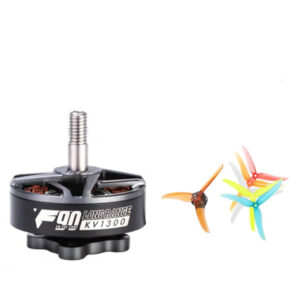
T-MOTOR F90 KV1300/KV1500 Motor For Cinelifter X8 Long Range FPV Build, T6143 Propeller orange/red/blue/yellow for F90 Motor
النطاق السعري: من $9.56 إلى $151.05 - محرك طائرة بدون طيار
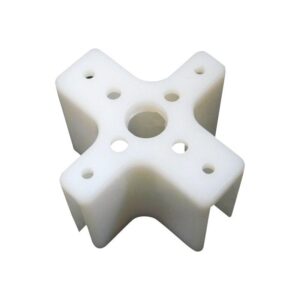
2pcs/4pcs/lot Plastic Motor Mount Cross Motor Base for SunnySky XXD Motor KT board / SU27 RC airplane Models part
النطاق السعري: من $9.62 إلى $12.73 - محرك طائرة بدون طيار
A2212 1000KV Brushless Outrunner Motor +SimonK 30A ESC+1045 Propeller(1 pair) Quad-Rotor Set for F450 F550 Multicopter
النطاق السعري: من $13.12 إلى $22.96 - محرك طائرة بدون طيار
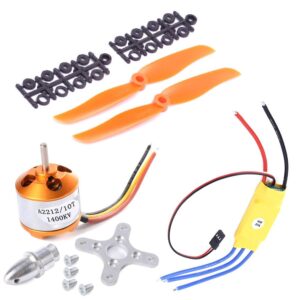
XXD A2212 2212 1400KV Brushless Motor 30A ESC Mount 8060 Propellers for RC Fixed Wing Plane Helicopter
النطاق السعري: من $13.53 إلى $22.35 - محرك GEPRC
GEPRC SPEEDX2 1102 10000KV Motor – ESC 12A Brushless Motor Black with Mini 1.6 -2 Inch RC FPV Racing Drone Multicopter Accessories
النطاق السعري: من $13.74 إلى $48.68 - محرك طائرة بدون طيار
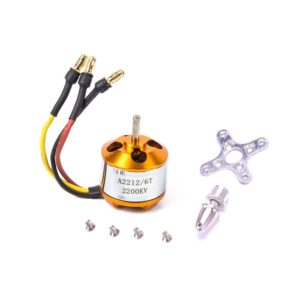
XXD A2212 2200KV 2212 Brushless Motor HW 30A ESC & 6035 Propeller SG90 9G Micro Servo for RC Fixed Wing Plane Helicopter
النطاق السعري: من $13.78 إلى $24.91 - محرك طائرة بدون طيار
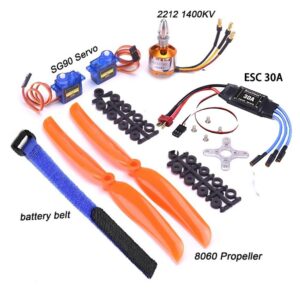
XXD A2212 2212 1400KV Brushless Motor 30A ESC Motor SG90 9G Micro Servo 8060 Propeller Set for RC Fixed Wing Plane
النطاق السعري: من $13.81 إلى $25.17 - محرك طائرة بدون طيار
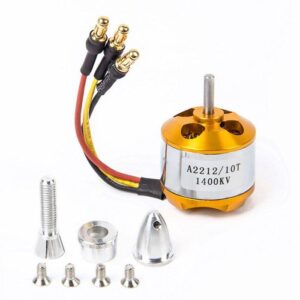
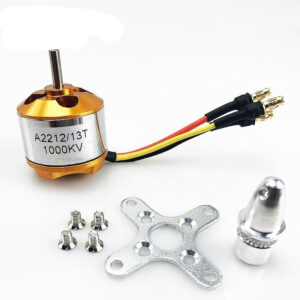
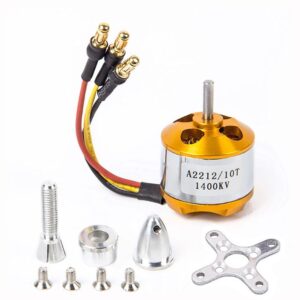
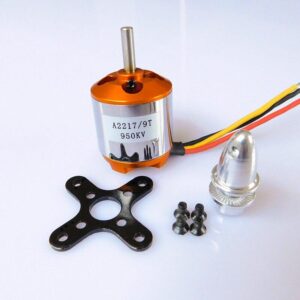
XXD A2212 930KV/1000KV/1400KV/2200KV/2700KV Brushless Motor for Quad rotor Multicopter and RC Aircraft
$14.17 - محرك طائرة بدون طيار
A2212 2212 2212 1400 كيلو فولت محرك بدون فرشاة بدون فرشاة 30A ESC SG90 9G Micro Servo 8060 مروحة لقطع غيار الطائرات ذات الأجنحة الثابتة RC
النطاق السعري: من $14.31 إلى $25.39 - محرك طائرة بدون طيار
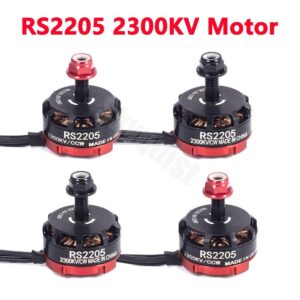
RS2205 2205 2300KV CW CCW Brushless Motor for FPV RC QAV250 X210 Racing Drone Multicopter
النطاق السعري: من $14.57 إلى $31.04 - محرك طائرة بدون طيار
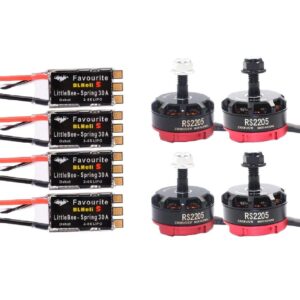
RS2205 2205 2300KV CW CCW Brushless Motor + LittleBee 30A BLHeli_S ESC for FPV RC Racing Drone Martian II QAV-R 220mm 250mm
النطاق السعري: من $14.95 إلى $56.60 - محرك طائرة بدون طيار
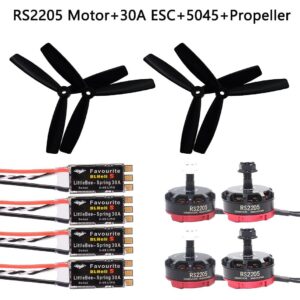
RS2205 2205 2300KV CW CCW Brushless Motor With LittleBee 20A/30A BLHeli_S ESC for FPV RC QAV250 210mm Racing Drone Multicopter
النطاق السعري: من $14.95 إلى $59.16 - محرك طائرة بدون طيار
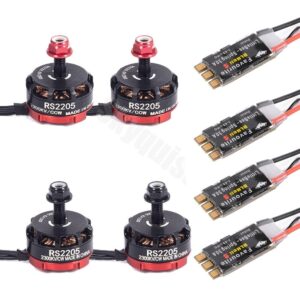
RS2205 2205 2300KV CW CCW Brushless Motor With LittleBee 20A/30A BLHeli_S ESC for FPV RC QAV250 X210 Racing Drone Multicopter
النطاق السعري: من $15.13 إلى $59.38 - محرك طائرة بدون طيار
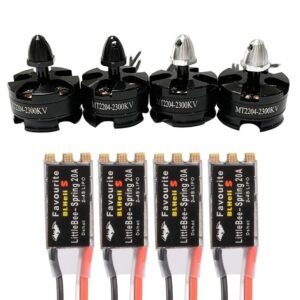
MT2204 2300KV 2204 CW/CCW Brushless Motor & FVT Littlebee 20A BLHeli-s SPRING ESC for FPV Racing Quad Motor FPV Multicopter
النطاق السعري: من $15.27 إلى $57.00 - محرك طائرة بدون طيار
New Brushless Motor A2212 2212 1000KV/1400KV/2200KV 40A ESC 6035/8060/1060 Propeller SG90 9G Servo for RC Fixed Wing Helicopte
النطاق السعري: من $15.77 إلى $28.12 - محرك طائرة بدون طيار
Brushless Motor A2212 2212 1000KV/1400KV/2200KV 40A ESC 6035/8060/1060 Propeller SG90 9G Servo for RC Fixed Wing aircraft
النطاق السعري: من $15.77 إلى $28.12 - محرك طائرة بدون طيار
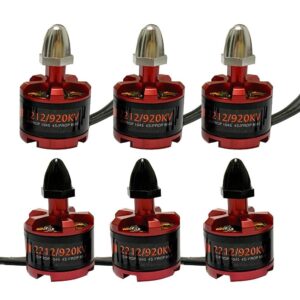
with 3.5mm Connector 2212 920KV CW CCW Brushless Motor for F450 F550 S550 F550 Multicopter
النطاق السعري: من $17.95 إلى $51.16 - مروحة DJI
2212 920KV Brushless Motor and 30A Brusheless ESC 2~4s 9450 Propeller for F450 F550 S500 S550 Quadcopter Multicopter
النطاق السعري: من $18.56 إلى $60.87 - المركز العالمي لبحوث السياسات العامة
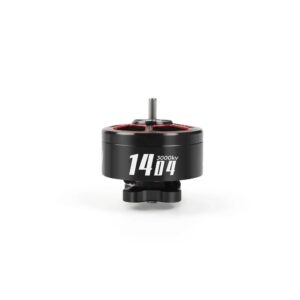
محرك GEPRC SPEEDX2 1404 1404 3000 كيلو فولت / 4600 كيلو فولت مناسب للطائرات بدون طيار Tern-LR40 FPV 2 بوصة 4 بوصة RC FPV كوادكوبتر حرة بدون طيار
$18.74 - محرك طائرة بدون طيار
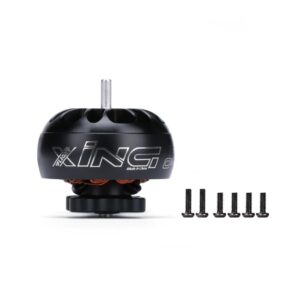
iFlight XING X1404 1404 3800KV / 4600KV 2-4S Toothpick Ultralight Build Black FPV motor with 2mm shaft for FPV drone part
النطاق السعري: من $19.84 إلى $65.02






 Arabic
  English
  Russian
  German